
REMOTE ASSISTANT WORK
Helping a visitor without sitting at the reception desk
The remote-assistance model allows human communication to remain available while the reception point itself can be located elsewhere.
Looking for a virtual assistant job where remote work connects with real people and real workplaces? Teleportel technology enables virtual reception, remote visitor assistance and customer-care workflows that combine live human communication with kiosks, visitor management, identity tools, access control and automation.
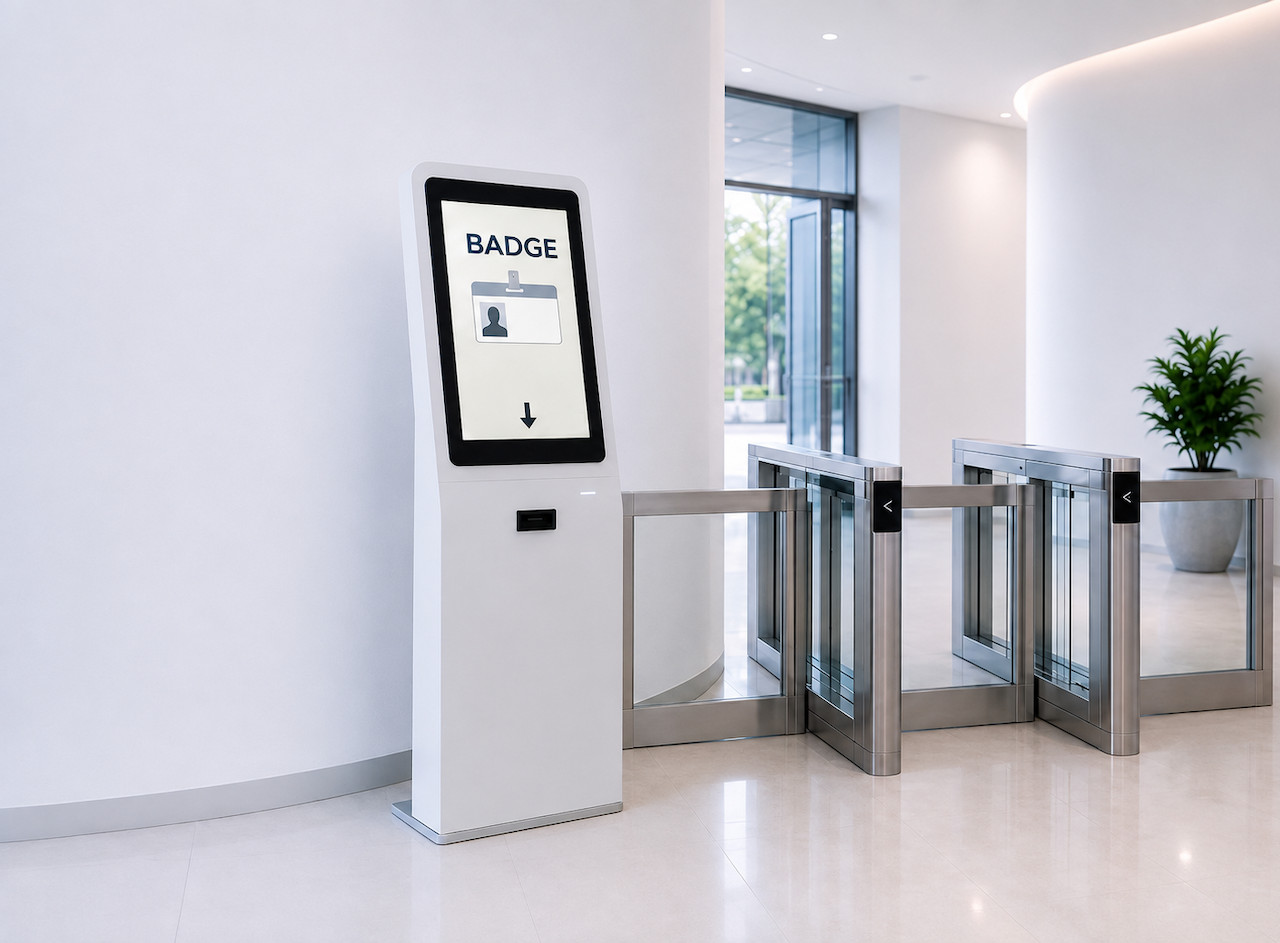
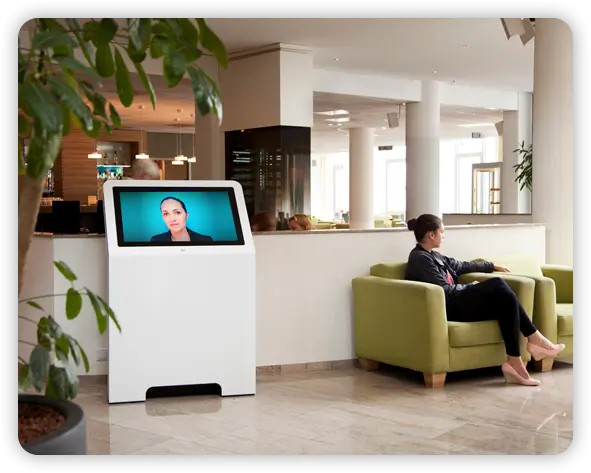
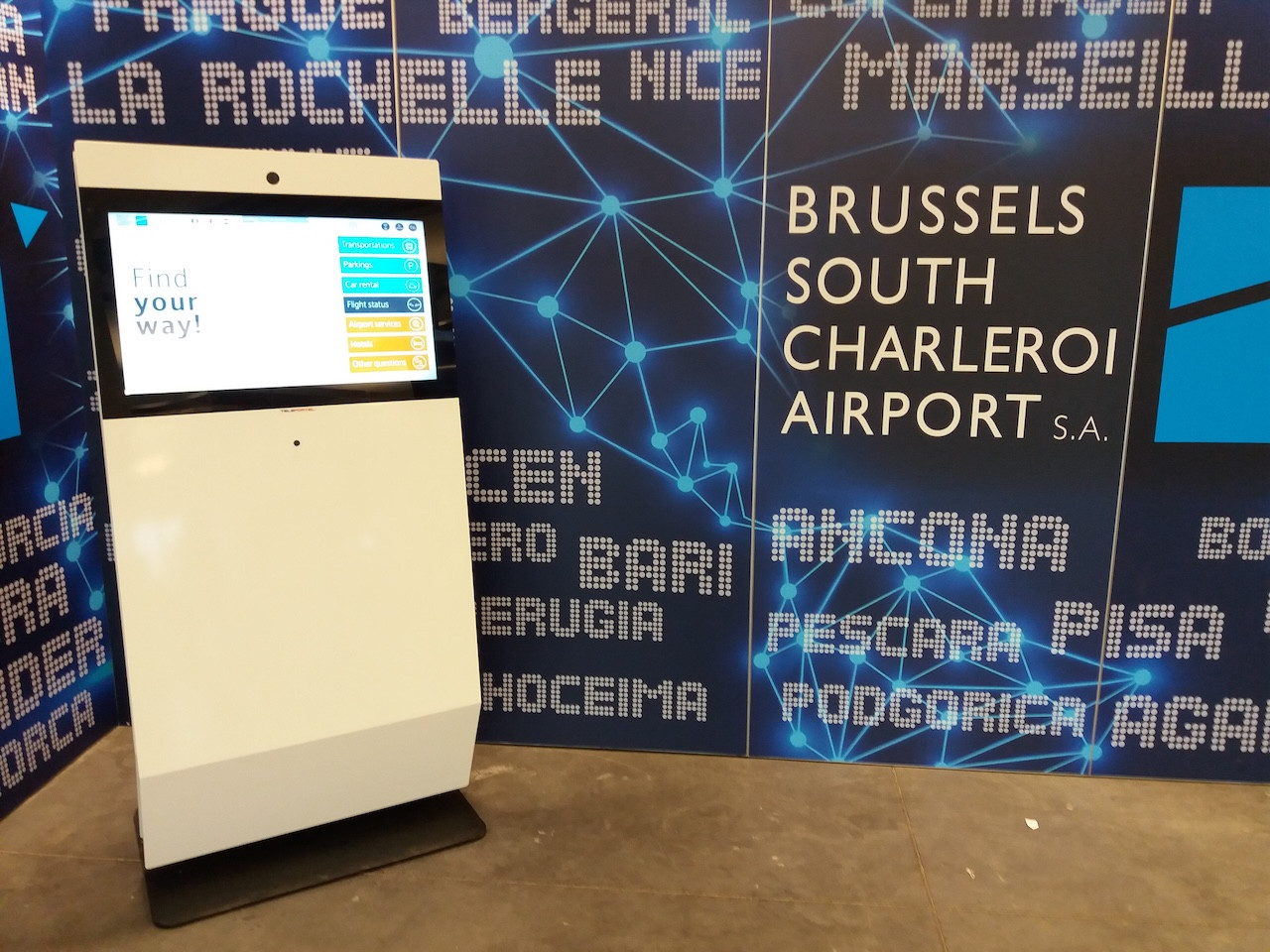
Many people searching for virtual assistant jobs expect traditional email, calendar or administrative work. Teleportel introduces another model: remotely assisting visitors, callers and customers who are physically present at offices, buildings and reception points.

In a Teleportel-enabled reception model, technology can handle predictable visitor steps while a remote person becomes available when someone needs conversation, guidance or personal assistance.
For people exploring virtual assistant employment, remote assistant jobs and virtual assistant careers, this overview shows the types of work that can exist around a Teleportel-enabled remote reception operation.
| Remote assistant activity | Role relevance |
|---|---|
| Remote Visitor Assistance | ★★★★★ |
| Virtual Reception & Front-Desk Support | ★★★★★ |
| Virtual Phone & Live Communication Assistance | ★★★★★ |
| Customer Care & Visitor Guidance | ★★★★★ |
| Administrative Reception Workflows | ★★★★★ |
| Visitor Check-In Support | ★★★★★ |
| Identity & Document Workflow Assistance | ★★★★★ |
| Host Contact & Visitor Routing | ★★★★★ |
| Exception Handling & Escalation | ★★★★★ |
| Multi-Site Remote Reception Support | ★★★★★ |
| Working Alongside Reception Automation | ★★★★★ |
| Human-in-the-Loop Assistance | ★★★★★ |
Role overview: the stars are a visual summary of role relevance to the remote reception model described on this page. They are not employee ratings, job guarantees or confirmation that a specific position is currently open. Actual responsibilities depend on the employer, service model and deployment.
The job title can vary by organization. The common thread is using remote communication and digital tools to help people complete a reception, visitor or customer-service journey.
Provide live assistance to visitors who connect from a physical reception point.
Handle live questions, routing and communication when a visitor or caller needs a person.
Support incoming interactions and help direct requests to the appropriate person or workflow.
Support reception-related administration, information handling, follow-up and structured digital processes.
In some operating models, provide personalized guidance or coordination to employees, guests or designated users.
Support executive-facing reception and coordination workflows where remote assistance is part of the service model.
Use text-based communication where an organization combines chat with remote reception or customer assistance.
Help visitors and customers resolve questions while connected to the organization's reception process.
Support more than one reception location from a centralized remote operation when configured by the organization.
These demonstrations show the connection between a person at a physical reception point and assistance delivered remotely. Press play when ready — the audio is an important part of the experience.
The remote-assistance model allows human communication to remain available while the reception point itself can be located elsewhere.
This is the human-in-the-loop side of virtual reception: technology handles the connection and workflow while a real person provides assistance when personal interaction is needed.
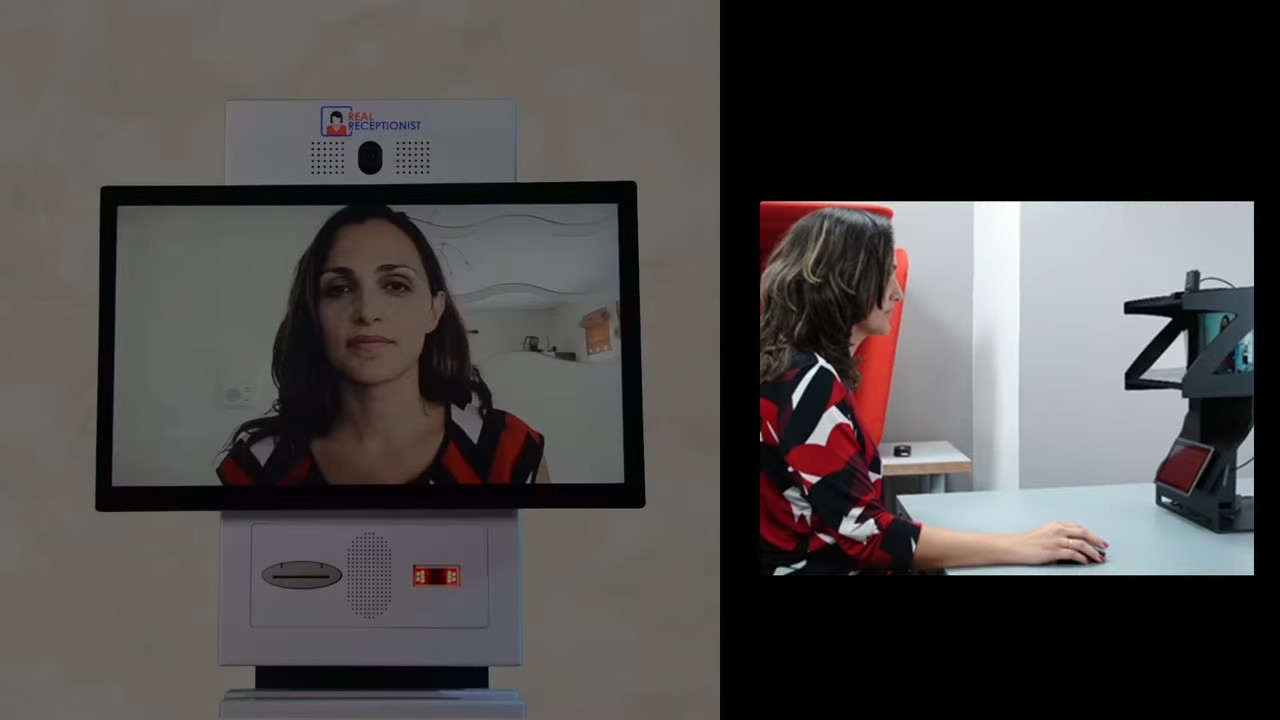
Remote virtual assistant work does not have to mean only inboxes and spreadsheets. Connected reception creates a role where communication, customer care and digital workflows come together — with automation taking care of repetitive steps and people focusing on situations that benefit from human assistance.
EXPLORE CAREER QUESTIONSClear answers for people researching virtual assistant employment, online jobs, remote assistant work and the role of a virtual receptionist.
Answer: A virtual assistant job is work performed remotely to support people, teams or business processes. Responsibilities can include administration, communication, customer care and coordination. In a Teleportel-enabled model, virtual assistance can also include helping visitors who are physically present at a remote reception point.
Answer: Start by identifying the type of remote work you want: administrative support, customer care, executive assistance, phone support, chat or virtual reception. Then compare the responsibilities, working hours, language requirements, location restrictions, technology requirements and employment terms of each advertised role.
Answer: Virtual assistant job offers may appear on employer career pages, established job boards, remote-work platforms and staffing providers. Verify who the employer is, what the role requires and whether the listing is current before providing personal information or applying.
Answer: Remote assistant jobs are support roles performed away from the employer's physical workplace. Depending on the role, work can involve administration, calls, customer assistance, scheduling, chat or reception. Teleportel technology demonstrates how a remote assistant can also interact with visitors located at a physical building.
Answer: Many virtual assistant positions are internet-based because communication and business applications are accessed remotely. A connected virtual reception role can also use online communication to assist a person at an on-site kiosk or reception point.
Answer: Virtual assistant employment describes paid remote support work. The arrangement may differ by employer and jurisdiction, so applicants should distinguish between employment, contractor and freelance opportunities and review the terms of the specific position.
Answer: The role can include communication, organization, customer assistance, administration, information handling and escalation. In virtual reception, the assistant may help a visitor understand what to do next while connected technology manages configured visitor and access workflows.
Answer: Virtual personal assistant jobs focus on remote support for an individual or defined group. Tasks vary widely and may include coordination, communication and administrative assistance. Applicants should use the actual job description to understand whether the work is personal, business, reception-focused or a combination.
Answer: Virtual executive assistant jobs generally provide higher-level remote support to executives or leadership teams. They can involve coordination, communication and administrative responsibilities. Where reception is part of the role, connected technology can help route visitors and interactions appropriately.
Answer: Administrative virtual assistant jobs focus on remote business-support tasks. In a reception environment, administrative work can sit alongside visitor information, host coordination, records, instructions and other structured digital workflows.
Answer: A virtual phone assistant provides communication or answering support remotely. Teleportel extends the remote-assistance concept beyond an ordinary phone call by enabling a person to connect with and assist visitors at a physical reception point.
Answer: A virtual call assistant handles remote communications and may answer questions, route requests or escalate an interaction. In a connected reception model, the communication can form part of a broader visitor workflow rather than exist as an isolated call.
Answer: A virtual phone attendant remotely handles or routes communications. For physical reception, a similar remote-attendant concept can be combined with video, kiosks and visitor workflows so a person can assist someone who is actually standing at an entrance.
Answer: Some virtual assistant roles are designed for home-based work, while others require a controlled office, specific equipment, security conditions or fixed locations. Whether home working is permitted depends on the employer and the responsibilities of the individual position.
Answer: Build skills relevant to the work you want to perform, such as professional communication, customer service, administration, digital tools, problem solving and remote collaboration. For virtual reception work, confidence speaking with visitors and following structured processes can be particularly relevant.
Answer: Match your experience to the role rather than applying only because the title says “virtual assistant.” Highlight relevant communication, customer-service, administrative, language and technology skills, and follow the application process published by the actual employer.
Answer: Search by both broad and specialized job titles. In addition to “virtual assistant,” consider remote receptionist, virtual receptionist, remote customer-care assistant, administrative assistant, virtual phone assistant and other titles that match your skills.
Answer: Remote technology can enable cross-location work, but an individual job may still be restricted by country, language, time zone, labor rules, customer requirements or data-security policies. “Remote” does not automatically mean the employer accepts applicants from every country.
Answer: Some employers recruit internationally, but applicants should check the permitted hiring locations in each listing. Worldwide availability depends on the employer's operating model and the legal, contractual and service requirements attached to the role.
Answer: Virtual chat assistant jobs use text-based channels to help customers or users remotely. Chat can complement live voice or video assistance, although the exact communication channels depend on the organization and its technology setup.
Answer: This page explains virtual assistant and remote reception work in relation to Teleportel technology. It does not itself confirm a current vacancy. Applicants should rely on an official, current Teleportel vacancy or application channel before treating a position as open.
Answer: Confirm the employer, job description, location eligibility, working hours, compensation terms and application method. Be cautious with listings that ask for unusual upfront payments or sensitive information before the employer and opportunity have been verified.
A Teleportel-enabled role can combine live service with automation so the remote assistant focuses on the moments where a person adds value.
A visitor reaches a Teleportel-enabled reception point at an office or facility.
Routine visitor steps can be handled digitally according to the configured reception process.
When the visitor needs help, the interaction can move from self-service to remote human assistance.
The remote assistant communicates with the visitor, answers questions and provides guidance.
The platform can continue configured notifications, routing, visitor or access-related steps.
A centralized operating model can allow remote staff to support additional interactions and locations.